
A group in my parish is currently working and praying through the Community of Hope International program, and this week we looked at family systems. Technically, family systems is a lens by which a person looks at the assumptions, practices, and (in some cases) psychoses that are present in a person’s family, be that their family of origin (the family in which they grew up) or their ‘chosen’ family (those they presently call their family, be they related by blood or not). Family systems helps us by shedding light on the way we act and, especially, the way we expect other people to act. It complicates, in a good way, the inner world of a person and what makes us do the things we do.
For me, family systems is particularly helpful in parenting. My wife and I made a conscious decision to pass our religion on to our children, but even those who do not raise their children with a particular tradition have to examine what they’re passing on. An “agnostic household” is not a neutral household; those who choose no tradition are still raising their kids with assumptions and expectations on what tradition is, how to engage with one’s past, and the role of adults (especially parents) in understanding society. Actually, I think parents raising children in traditional systems have an easier time with guiding children through assumption and expectations, because we are more conscious of passing down something, whereas agnostics and atheists are sometimes blind to what they’re actually passing down.

Some of the traditions that I’m passing down are pretty obvious. As an Episcopal priest conscious of my role in the wider community and my local parish, I think a lot about how my teaching, preaching, and actions help to form others. My wife, a trained librarian who is currently staying home with the kids, is also very much conscious of how reading with our children, playing with them, giving them chores, and being open and also stable with our emotions are affecting how our children grow up. We teach them that God is love and that all things are possible for God (my eldest daughter reminded me the other day that this means that love is stronger than the gravity of a black hole. True!). We present our traditions, we show our children the importance of things like reading books and playing outside, and we ask them what they think things mean. All that’s above board.
But what about the assumptions and expectations that we’re not conscious of? Or what about the repercussions of learning truths about, say, God’s love and eternal presence in our lives – but also while living in a world where hatred, division, and war are ongoing? Are we preparing our children for times of trouble and doubt that will surely happen, or are what we teaching them only preparing them for a bigger fall than if they hadn’t learned some rather idealistic theology? These are the kinds of questions that any parent wrestles with, and they’re good thing to contemplate them with God.
That “with God” part is pretty important. How often do we simply worry instead of worry with God? The difference might not seem to be all that much (God is always with us, right?), but the difference is very, very important. Worrying begins as a reflex that we enter into and then, often unconsciously, continue to entertain. When we go to God with our worries, on the other hand, we make a conscious decision to turn away from those worries and look, with them, towards God. We stop saying, “I hope X doesn’t happen,” and we start saying, “God, I’m worried that X will happen.” That’s a huge shift, and it’s a powerful shift even if it didn’t involve God, who is the source of all healing.
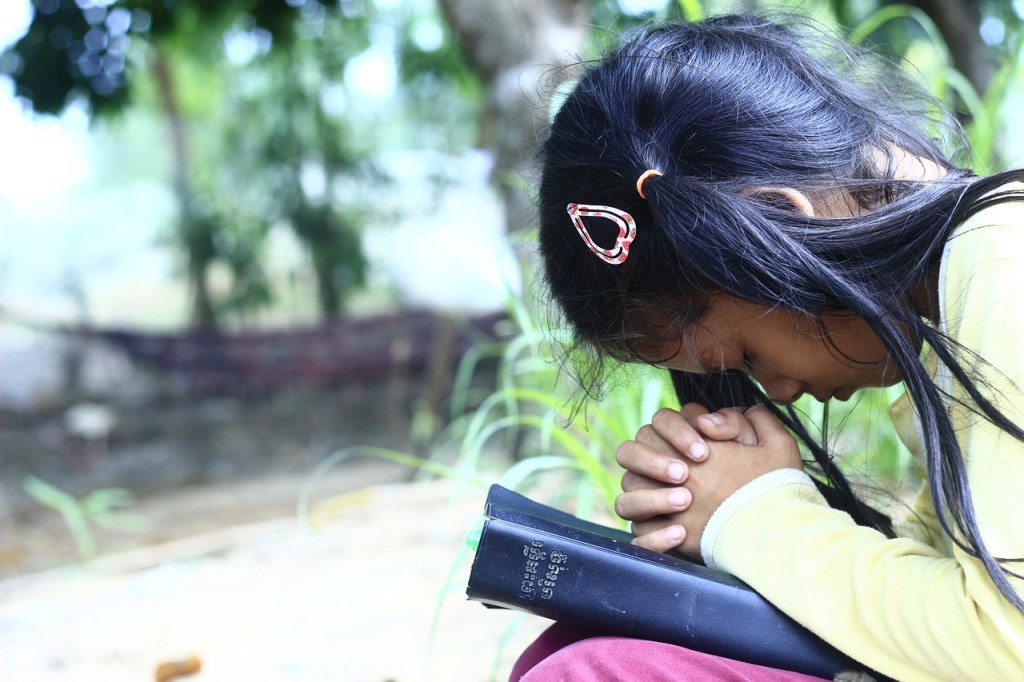
Talking to God about our parenting is essential. God is constantly forming us as parents, and part of that formation is opening our hearts with God and reflecting on what we’re doing and, perhaps even more importantly, how we feel about what we’re doing. Putting our feelings into words, directing them toward another person (and not just a person but a Person, God), and letting the Holy Spirit loosen up our clenched hearts allows us to grow in Christ and to grow as parents. God mingles with our worries, assumptions, past hurts, and our hopes in order to heal what needs to be healed and to lift up what is good and joyful within us. Talking to God is one of the many ways that God talks to us.
Returning to family systems theory, this aspect of ‘healing’ is extremely important. There are many assumptions and expectations that are completely innocent but which, if they go unnoticed, can deeply injure those in our care. I was raised with the expectation that hard work pays off, but that’s not always the case. Especially in a religious life, sometimes, no matter how hard we pray or how hard we work for the poor or the downtrodden, things just don’t work out. Knowing that such an expectation is lodged deeply in my heart helps me not lodge it too deeply into my children’s hearts – or at least it makes me aware that I need to temper the idea with some teaching on how to deal with failure.
But our healing in Christ isn’t just so that bad things don’t happen in the future. Knowing about my expectation (which isn’t necessarily a bad one!), helps me deal with my own failure with more grace. I can understand why I get so bent out of shape when things don’t go right or even when things go right but I feel no sense of accomplishment or joy. As I wrote above, knowing these things about myself complicates, in a good way, my inner world. It helps me see myself as a fuller person. And that fuller person is always fuller in God.
Healing others and being healed ourselves – that’s what all this contemplation is about. Getting closer to God is the point, and getting closer to God means being more fully ourselves and a part of our communities. What better thing can we offer our children then a path to be who God hopes for them to be?


 Incense and Crayons
Leave a reply to Tim Hannon Cancel reply