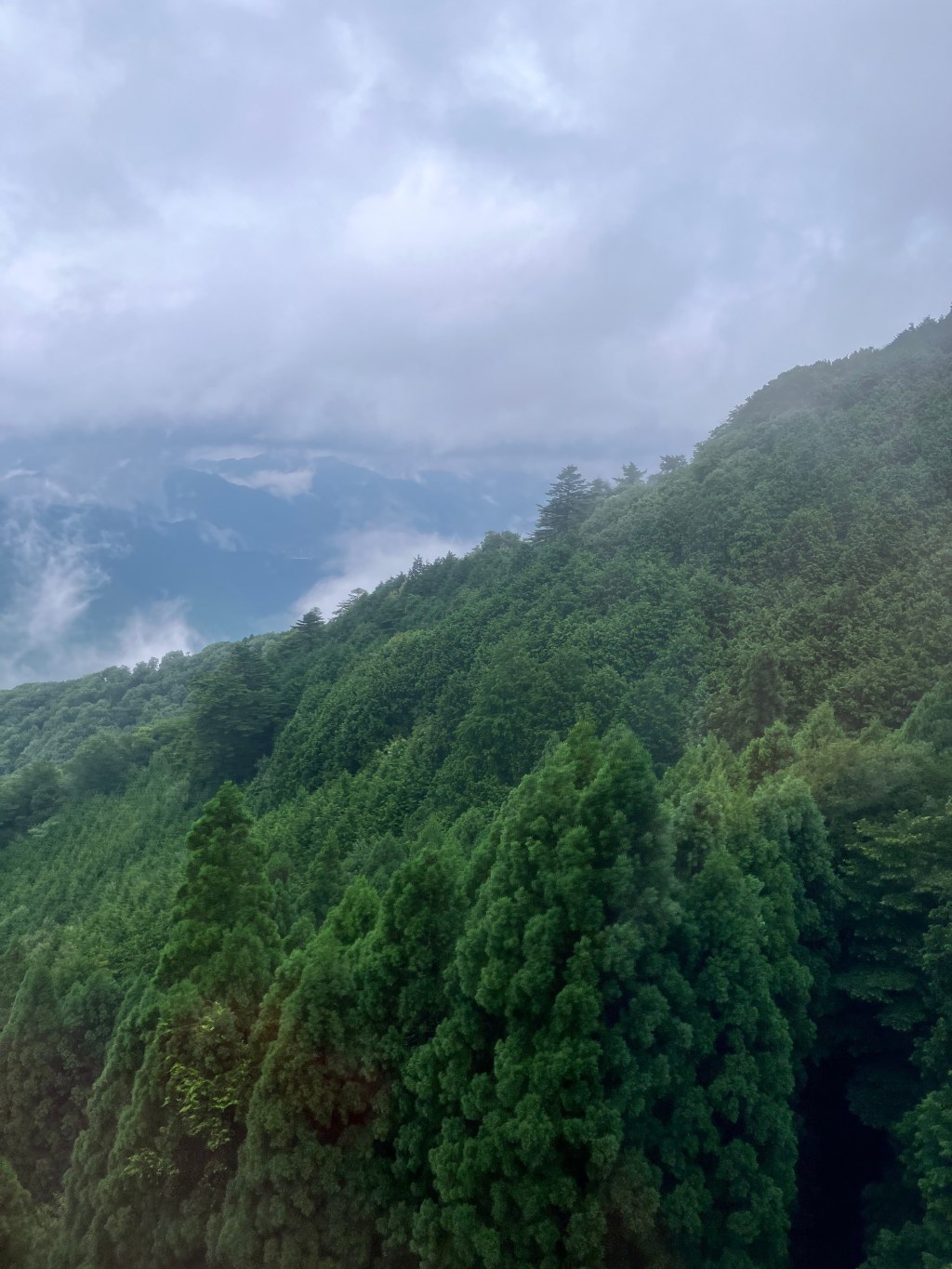
This morning I spent my prayer time in the forest. The winter was long, and we got record amounts of snow, so the forest path near me (which is part of a state park) was been mostly inaccessible since early November. This was therefore my first time beneath trees for quite a while, but also the first time beneath “my” trees. Like I said, the path is part of a state park, so the trees don’t really belong to me. They are, however, the trees that are closest to me and perhaps it could be said that they are the trees that I belong to.
It is no surprise (it seems to me) that my first venture out into the forest that I belong to happened on the Feast of the Annunciation. This is the day we remember the angel Gabriel’s visit to Mary, Jesus’ mother, to both ask her and tell her that she would conceive God’s son. It is also the traditional date of the Crucifixion; therefore March 25th marks the moment of Incarnation and the moment of Salvation, when all things were “finished” (John 19:30). What better day to be rebirthed myself into a life into a world of trees?
March 25th is also the date when the Ring was destroyed in Lord of the Rings. Tolkien chose this date on purpose, because he wanted to align the climax of his novel with what he, as a Christian, saw as the climax of history. Tolkien drew many parallels between our world and that of Middle Earth, and for a while he conceived of his invented world as taking place in the history of our own world. Frodo, Sam, and Aragorn are all “types” of Christ: they do not take the place of Jesus but prepare the hearts and minds of those who hear their story for the greatest story, which is God’s entrance into the world and the defeat of death once and for all.
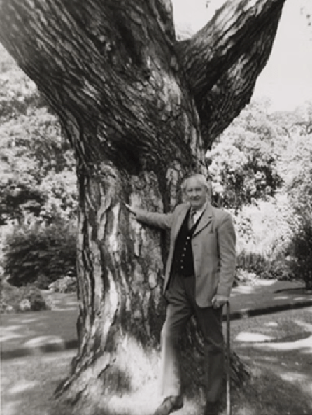
Tolkien (and C.S. Lewis) saw all myth and legend as prefiguring Christ. Myths are therefore “true” in the sense that they take part of and point to God’s great work in Jesus Christ, who is the single True Myth made real in this world. Reading Lord of the Rings is therefore a great Christian act, just as is watching Star Wars, playing Dungeons and Dragons, and reading about Sigurd the dragon-slayer from Germanic legend. If you want to know more about these connections, I encourage you to check out my friend Joseph’s substack (click here), in which Joseph explores the many influences of and influences on Tolkien and Lewis’ writing, as well as some imagining of what Tolkien and Lewis might have thought of things like anime and Star Trek. But I want to talk here a little more about trees.
God is present in all of Creation. As a creative artist, God made the world and left the stamp of his personality and being on what he made. Just as you can see the personality, hopes, and griefs of any artist in their art, we can see the character of God in Creation. This doesn’t mean, of course, that God is one in the same as the created world. At least, that’s not how Christians view things. Pantheism equates divinity with reality, while panENtheism sees divinity within reality but also existing beyond space and time. For Christians, God is imminent (in the here-and-now) and transcendent (beyond the hear-and-now). God is with us but also beyond our experience and understanding. In prayer, we meet God in the joys and griefs of our lives but are also led beyond them towards wisdom. In serving the poor, we tend to the material needs of those who have so little while also raising their spirits above the troubles and chances of this world. Just as Jesus is fully God and fully human, so too are Christians asked to live fully in this world bound by time and space and in the eternal world where all is made right in Jesus Christ our Lord.
Frodo and Sam are types of Christs, and reading about them prepares us to better understand the work of God in Jesus Christ. In a similar way, trees are types for God; walking beneath trees prepares us to walk with God. Trees aren’t God, but being in a forest teaches us about who God is and how God is present in our lives. In a sense, this is somewhat obvious: the turn of the seasons in a forest reminds us of the cycle of birth, death, and rebirth that we face in our lives as disciples: we die to our sins and are reborn through the Holy Spirit to new lives in holy virtue. And we continue to die to our sins, which is why we confess our sins to God (be it in our own hearts, on Sunday morning during the liturgy, or in the formal Sacrament of Reconciliation). Our confessed sins fall like trees in the forest and are used as food for the rebirth of new plants in subsequent years. David Haskel meditates on some the philosophical and sometimes spiritual meaning of the turn of the seasons in The Forest Unseen, written in the forests around the University of the South in Sewanee, Tennessee, where I went to seminary. I highly recommend the book to anyone interested in this topic.
God is not only in metaphor, however, or in typology, but in spiritual connections between things. God is also in trees mystically. I see trees like a great landscape that one can look over, not just the landscape of a forest but a landscape of mountains and belief, of hope and pathways, of life and death and rebirth in the midst of it all. It’s a landscape that you can stand within but also that you can look out upon from above, like how Bilbo climbed a tree in Mirkwood and found a beautiful place of sunshine and butterflies. And if you look out across that landscape and glance for a moment the horizon far beyond, even between a clef in a mountainside, there you will see God looking right back at you. And God will be in it all and above it all and his gaze will be himself spread out over the land and baked into the branches and leaves and air.
God is in the way trees grow. A branch turns off from the trunk and leans out over the open space, and the curve of the branch speaks of God’s presence and love. This morning I came across a tree that had fallen down, and the stump had been cut by a park ranger so that it was flat and you could see all the rings, and the rings told all about the years that the tree had stood there, all the years that God had thought about that tree in the winters and in the summers. And I touched the rings and some parts were smooth and others bumpy from the saw, and it was a gift to be able to see inside the tree to the record of its life, and I wondered about how God can see the same thing inside us, whether we have fallen over from the grief of living in this world or are still standing hale and whole and strong in this world. God also touches our lifeblood and the record of our minds and hearts with gentle fingers, lovingly gazing upon us, and that touch is healing and transformation. Imagine if we could touch a fallen tree and it was made alive again, that it stood tall once more but not just in physical reality but inspirit as well, and that in touching the tree and healing it, we became part of the tree and the tree became part of us. That’s something of what it’s like when God touches our souls and our hearts, now in this life and in the life to come.
When we meditate on trees (or anything for that matter), we let the trees themselves speak. In humility, we step back with Christ and “die” so that something else may speak. And by doing this, we become a place where things like trees or mountains or the wind gains a voice. We become the instrument by which they speak and converse. A poem or a painting is written within our souls. We are the paper or canvas upon which God creates his art with nature. And in so being, we are transformed more fully into God’s beloved image.

 Incense and Crayons
Leave a comment