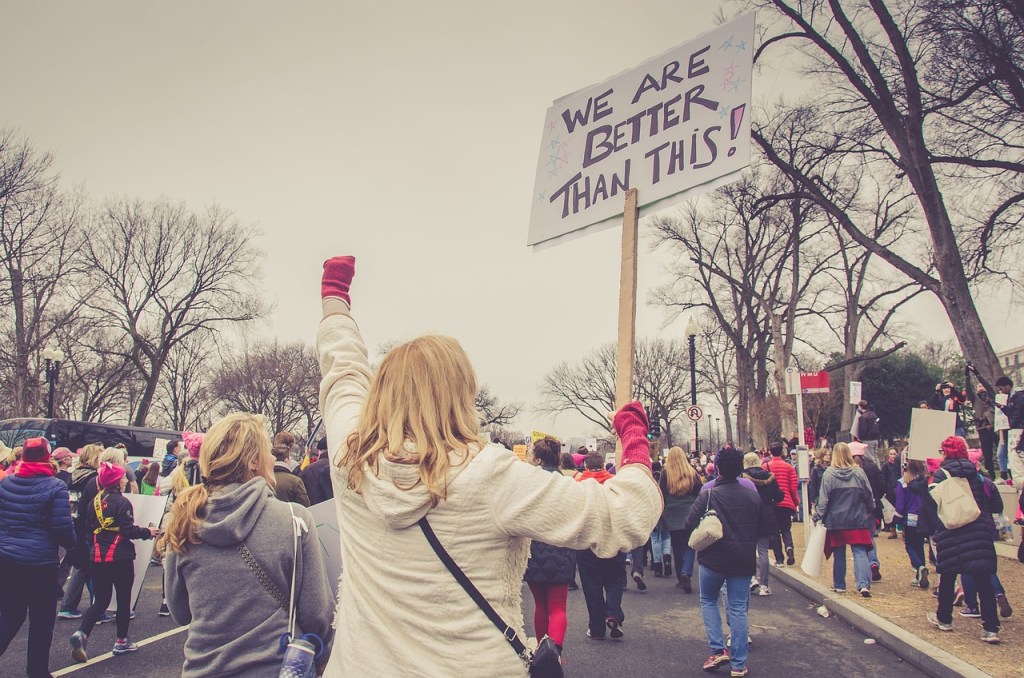
As a rule, I do not talk about politics as a priest. I post my opinions and thoughts on my Facebook, which I see as private, but when I’m acting as a priest, and especially when I have my collar on, I rarely talk about politics. Some will say, well, everything is political. I disagree. Politics has to do with the making of policy by a constituency or a representative. Jesus’ message, in my opinion, was not political, and I actually think that he purposefully avoided making political statements.
Hopefully that’s an adequate introduction to a post about praying with politics.
Praying with politics is as important as praying with any other sphere of life, but, because politics involves so many different people and so many different peoples’ groups, it’s not easy. Simple intercessions and thanksgivings only go so far. Often, I think that we pray about politics like we might (inappropriately) pray about sports: O God Almighty, may my team win. Thank you God for giving us this victory. Does God care what sports team wins a game? I don’t think so. Does God care about which political party gets its way? Sometimes, but not as often as we think.
The United States, where I live, is currently a severely divided country. If one side says yes, the other will say no. If one side agrees with some course of action, the other side will disagree almost without having heard why the first side supports it. There is no more political spectrum; there is a wall, and that wall is so thick that, it is thought, not even prayers can pass through it. We have forgotten how to pray for our enemies, much less that praying for our enemies reminds us that we should work to have as few enemies as possible.
That said, I do have political opinions. I think some courses of action are right and others are wrong. I believe that our Christian tradition leads to certain actions in the political sphere over others. And, especially now, I feel that certain actions that my country is taking will have (and are now having) dire consequences. I am worried about people. I am worried about my children’s futures. I worry about what will become of our country, and I believe that certain political actions will help, while others will hurt, the fate of our country.
When we pray for anything, however, we should pray as broadly as we can. A Christian should not just pray that Jack in the hospital or Sally at home with covid gets better. We pray for Jack or Sally’s family, their doctors and caregivers, but also for their mental and spiritual well-being. And this prayer for individuals should lead us to pray for others in similar situations as well. If I pray that my friend Bill is able to quit drinking, my next prayer should be that everyone struggling with alcohol is able to put the bottle down and be healed, or even that all those with substance abuse issues are able to overcome them, with the help of their communities, and that they might grow closer to God. Christian prayers are broad prayers.
I think praying about politics is the same. Venezuela is a good example. Personally, I’m a pacifist. I don’t like that military force was used to steal another country’s leader away. I also acknowledge that Maduro was a highly problematic leader that caused a lot of harm. Now, it may seem that, in prayer, I have to choose one: to either give thanksgivings that Maduro was brought to justice or to ask forgiveness for our country using military force in what I think is an inappropriate way. But that’s not the case. I can pray for both, and I think it’s my Christian duty to pray for both. And after each prayer, I always pray, “But your will, not ours, be done.”
Prayer isn’t a list of things that we want God to get done, nor is prayer a bunch of things that we should be thankful for, even though we don’t always feel thankful. Prayer is a conversation with God Almighty, Lord of Heaven and Earth, and that conversation is two ways. Even in silent prayer, we are communing with God. Our hearts and spirits go out to God, are met by God, and are returned to us enlightened, strengthened, and healed. Christian prayer is transformative, because it always gives to and receives from the divine, the source of all.
I can express my desires for peace and my discomfort about what I see as imperialist action to God, but my expression is not the end of my prayer (nor is it the beginning, but that’s a different story). When I pray “God, forgive us for our imperialistic ways,” I should listen to God, because even if God agrees with me, God has more to say and a broader way to understand imperialism, the military, and creeps like Maduro than I do. Prayer isn’t checking to see if God agrees with us or not, and prayer isn’t goading God to get things done. Prayer seeks to deepen our understanding of the human condition, of God’s person and nature, and our role in the world. Again, prayer is transformative and enlightening, and dropping off our opinions in God’s suggestion box does not lead to transformation or enlightenment.
In the gospels, God tells us to listen to Jesus. “This is my son, the beloved. Listen to him.” So listen. Pray and then listen to what God has to say, not what your own heart wants to hear. Actually, try listening to God before you pray, too. Whatever the case, remember that it is God who rules the world, not some politician, not our own view of the world, but God, Jesus, the Lord of All. Everything we do should be to develop a deeper relationship with him and with our fellow creatures all throughout Creation.

 Incense and Crayons
Leave a comment