Before you read this, start with silence.
No, really, please do. Sit in silence for at least ten seconds. Ten minutes would be better. Not because my meditation here will be better if you do (though, hey, you never know), but because silence is just plain good for us. So take some time.
…
One of the things that I do as a priest is open up space for people. I often do this by being silence. People react to this silence differently: extroverts tend to fill it up with their spoken thoughts – which isn’t all that bad of a thing. Extroverts need patient silence, which they don’t often get in a world that often rushes people to be succinct. Introverts, on the other hand, need space to gather their thoughts and feelings together before they feel comfortable expressing them. As with extroverts, introverts aren’t always given patient space to do this, because our culture is (or thinks it has to be) fast-paced. A silent presence can help give them this space.
I think that a silent, patient presence is something that all Christians can gives, and it’s one of the things that I think Christians in particular are called to give our world. Jesus met many different kinds of people, and he gave them space to think and to tell their stories. Sometimes the people he met were antagonistic (actually, many people he met seemed to be antagonistic), but he gave them space to say their piece before he responded to them. Jesus also met people who needed to talk because no one would listen to them. I think of the Gerasene demoniac (Matthew 8:28–34; Mark 5:1–20; Luke 8:26–39) or the Samaritan woman at the well (John 4:4–42). Both found that they could speak their pain and struggle after Jesus drew near to them as a patient presence. As Christians, we are called on to do the same for those we meet in our own lives.
Christians are not, however, the only ones who have a call to nurturing a silent presence, though others would use some other word besides “call.” Buddhists also try to cultivate a calm and welcoming presence. I’m not a Buddhist myself, and I mostly only have experiences with Zen Buddhists in Japan, so please forgive me if I over generalize. It seems to me, though, that one of the things that Buddhists offer to our world is an open space of peaceful contemplation in a busy world. A Christian might say that this is one of the ways that Buddhists “serve” the world, but a Buddhist might say that this is one of the ways that they simple are by means of their meditative practices. In particular, many Buddhist prayers lead to a self that is clear, open, and (at least in Zen) null. They aren’t attached to anything, or at least they try not to be, and they obtain this non- attachment through their meditation.
We usually think of Christian prayer as intercessory (“please God, help this person” or “please God, help me”), but in fact Christian prayer is much more robust. Actually, the two types of prayer that most people ask me about are silent prayer and lectio divina. Both types aim to cultivate a sense the inner world of the self. This is an important sense that usually plays second fiddle to our normal five senses (if it’s considered important at all). Think of it this way: when you’re watching sports, say American football, you’re paying attention to a lot of things at the same time. You’re watching the person who has the ball, of course, but you’re also watching where each of the defending players are positioned and, further, how the offense is positioned intercept the defense. You might be looking out for a foul, too, or thinking about how a similar play happened in another game. Your sense of sight and sound are fully engaged and, often, focused on multiple things at the same time.
This same thing happens inside of us as well. There is an inner world that contains our consciousness of the outside world, our consciousness of our feelings towards the outside world, our opinions of what is going on, and often even a sense of right and wrong about those opinions. Right now, I’m thinking about what I’m going to write, but I also have in my head a sense of what this whole meditation is about. I’m also keeping my mind open to the my knowledge of the Bible in case I can think of a verse to quote, but I’m also thinking of things in pop-culture that I may be able to use to help my readers understand what I’m trying to get at. At the same time, I hear someone mowing the lawn outside the window and am trying not to be distracted by it.
The process of silent prayer, and in some part lectio divina too, is training ourselves to become aware of what is going on in that inner world of ours and in some way managing it. We sound it out like boat might use sonar to understand what is going on in the waters beneath it. We get a sense of the space and shape of our inner worlds as if we were shining a flashlight around a dark cave. And we do this, importantly, essentially, with our mind turned towards God, because that flashlight and that sonar are not things we created but are, instead, our own internal eyes given understanding by the presence of the Holy Spirit.
Artists seek an understanding of their inner world of the imagination in much the same way (which is why I think that creativity is a lot like prayer). I can only speak for the writing process myself, but from what other artists tell me, we share a similar process. When writing, we can’t focus on just one thing: does this sentence make sense, or what a character looks like, or what’s the weather like? We need to open our minds to the entire world of the story, from the immediate situation to the where the story began and where it’s probably going and everywhere in between. One art philosopher, Anton Ehrenzweig, calls this “scattered attention”, in which we are seeing all things and writing one thing at the same time. Prayer is a lot like that, especially silent prayer and lectio divina; we see all of the space within ourselves, all of what God has revealed to us, just as we pray for one thing or focus on one word or one verse of Scripture.
I think that what Buddhists (at least Zen Buddhists) try to achieve is this sense of “scattered attention.” They may focus on a single flame or chant a specific sutra (or even say the incredibly short Amida Butsu prayer), but their minds aren’t focused on any one thing. Their attention is broadened so that it accepts and is at peace with all the things around them, even if they are distracting – or especially if they are distracting. The sense of peace that many Buddhists have comes from living within this scattered attention and living unattached or unfocused on any one particular thing.
Christian silent prayer and lectio divina are similar, but there is an important difference. Christians aren’t trying to become untethered to everything or to become completely disinterested. We Christians, like our Buddhist siblings, might wish to become freed from distractions or “apathetic” to our passions, but we do this ultimately because we want to be completely bound to God. In other words, we are emptied like Jesus Christ (this is called kenosis) so that we may be filled by God in the Holy Spirit. We must die so that we are reborn. The Christian critique of Buddhism is that Buddhists stop at dying; the Buddhist critique of Christians is that Christians move too quickly to rebirth. We need to spend more time dying.
Dying is, of course, not a comfortable thing. We would rather have life. But the wisdom behind the Christian focus on dying to ourselves is that, unless we die, we shall never truly be free. The death Jesus died, he died to sin, once and for all, but the life he lives, he lives to God (Romans 6:10). That’s the wisdom and the foolishness of the cross, and foolishness is always a death.
All religions search for life – true life, that is. Religions are not comfortable with the status quo and just “making do.” Religions hope for the inner depths of what it means to be human, even if that humanity must be lost before it can be gained. How much can we learn from our siblings across religious “divides” about what this life is. How much indeed!
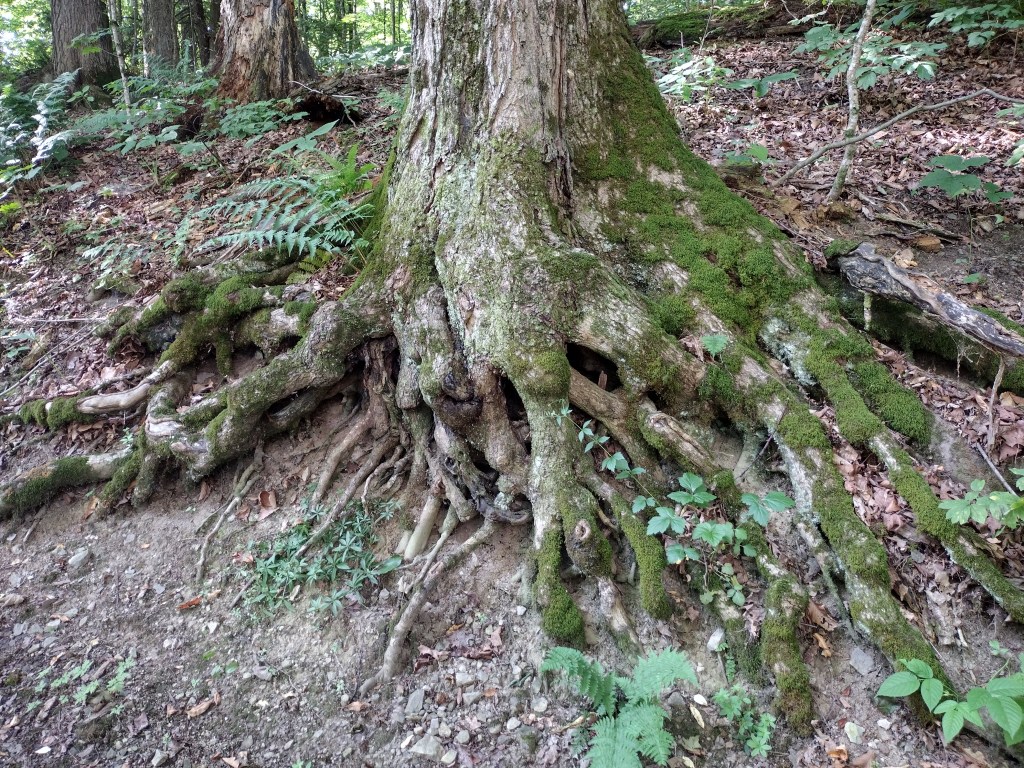
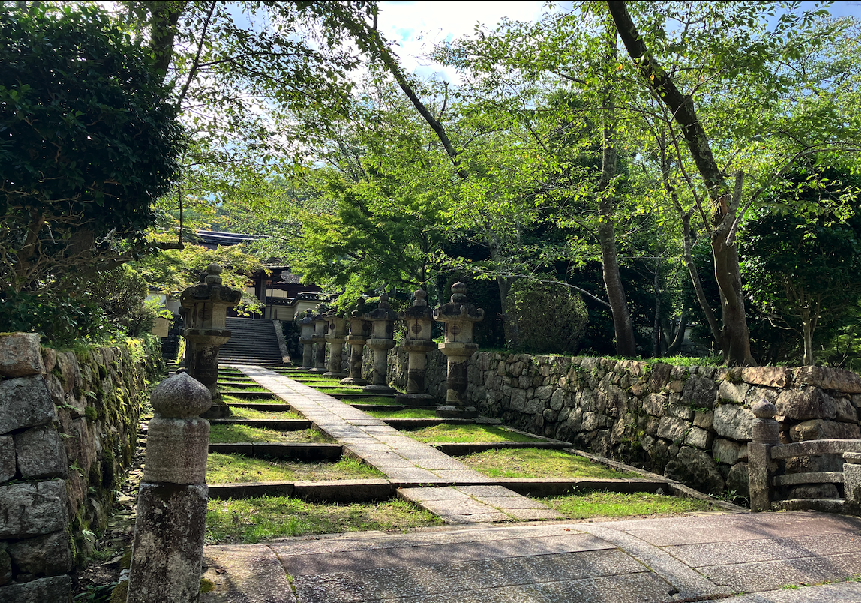
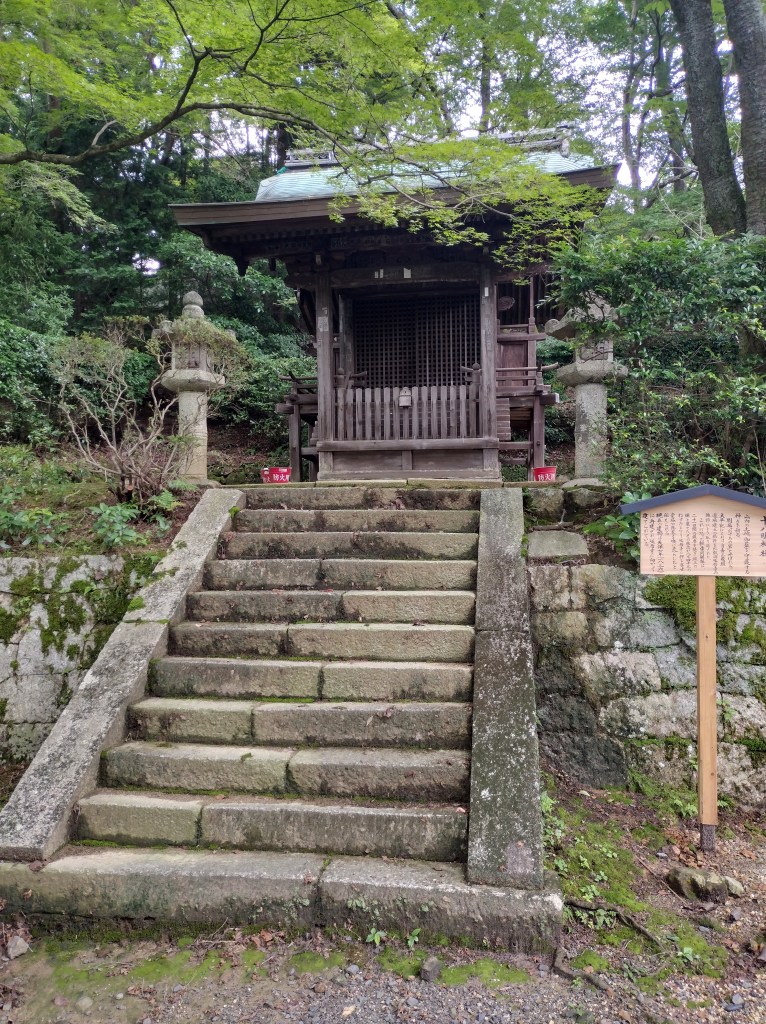
The pictures in this meditation were taken by the author in Central New York (header) and at Miidera Temple in Shiga, Japan

 Incense and Crayons
Leave a comment