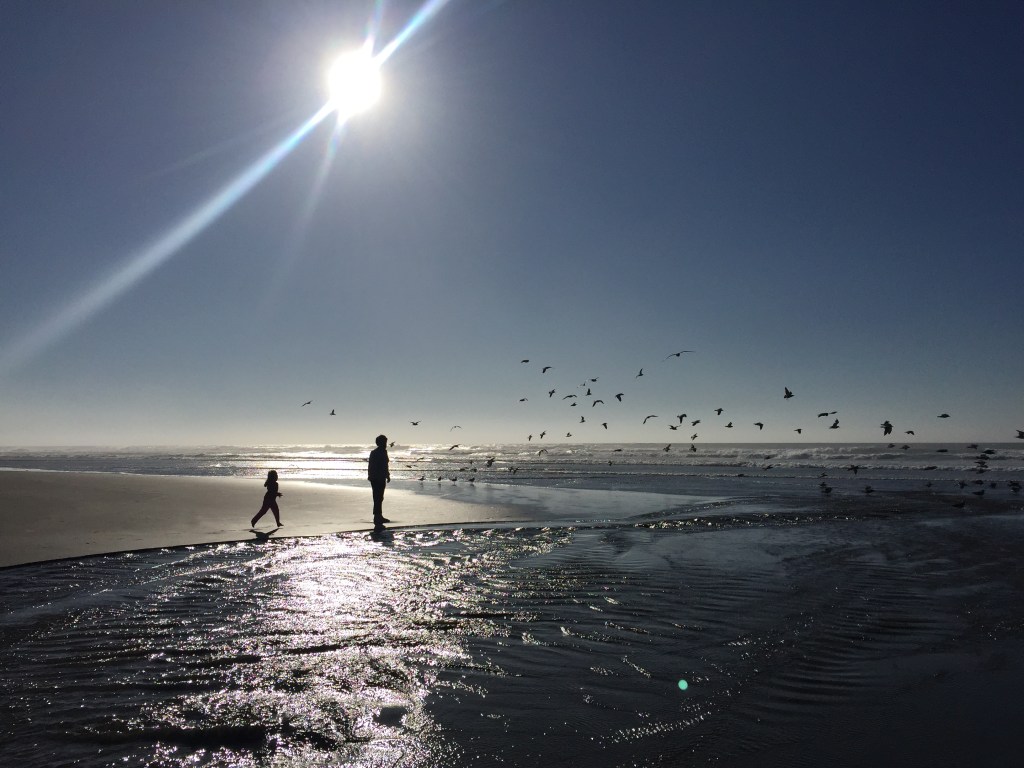
In the Episcopal Eucharistic Prayer D, the presider invites the congregation to think about what trees might say in heaven. That’s not exactly how the BCP puts it, of course, but basically it’s what the invitation asks people to do. In the words of the prayer itself: “Joining with them [the heavenly chorus, that is], and giving voice to every creature under heaven…we sing (or say).” The word “creature” here doesn’t just mean “living being” but every created thing, from fleas to galaxy. And here we are invited to give all of that a voice in singing, or saying, the sanctus.
Now, there’s a lot to say about this invitation theologically, but I want to look at it for a moment creatively. Or, to put it better, I want to look at it fantastically. It seems to me that the only time that we consider what things other than humans might want to say, or how they glorify God, or even if they glorify God, is in in the realm of fantasy, and specifically fantastic storytelling. I also think that wondering what other creatures in the universe might have to say about God is a very Christian thing to wonder.
There are three animals that speak in the Bible: the snake in the garden of Eden, Balaam’s donkey, and the eagle in the Book of Revelation. The first and the last of these carry a lot of baggage for many Christians, and that baggage prevents us from seeing that they act very much like talking animals in myths and legends throughout the world. Animals in these stories often come with messages or lessons, and this is the case for those animals in the Bible: something is about to happen that is big and important. What that big and important thing is, and what role the animal has to play in that thing, is different for each story, but the thread that binds all these stories together is that animals have important things to say to us (if we would only listen, as is the case with Balaam’s donkey.
But what if the trees of Eden spoke? What about the ciders of Lebanon? What if the bush that God caused to grow over Jonah spoke? What would it have said to the successful yet sullen prophet? We don’t know, and at least from what we can tell in the Bible, the cultures that wrote the books of the Bible weren’t all that concerned with what plants had to say to humans. Even so, wouldn’t it be interesting to see what they had to say?
Some Christian authors did wonder about this question, and thankfully their works have survived the many years. There’s a long poem written in Anglo Saxon (also known as Old English, spoken from around 600 to 1100 AD) called “The Dream of the Rood.” A “rood” is another word for a cross, and the poem is written from the perspective of the Cross that Christ was crucified on, from its time as a tree to its time on the hill. The Cross voices both the reaction of Christians to the crucifixion in its descriptions of the horror of seeing God’s Son crucified, but it also gives voice itself to Jesus. It stands tall in courage, but it also takes part of being crucified with Christ on the hill. In this, the Cross is both a mirror for us and a light shone into the Passion of the Lord. And this – the Cross as a mirror and as a light – is actually some pretty good theology in how we carry our own crosses.
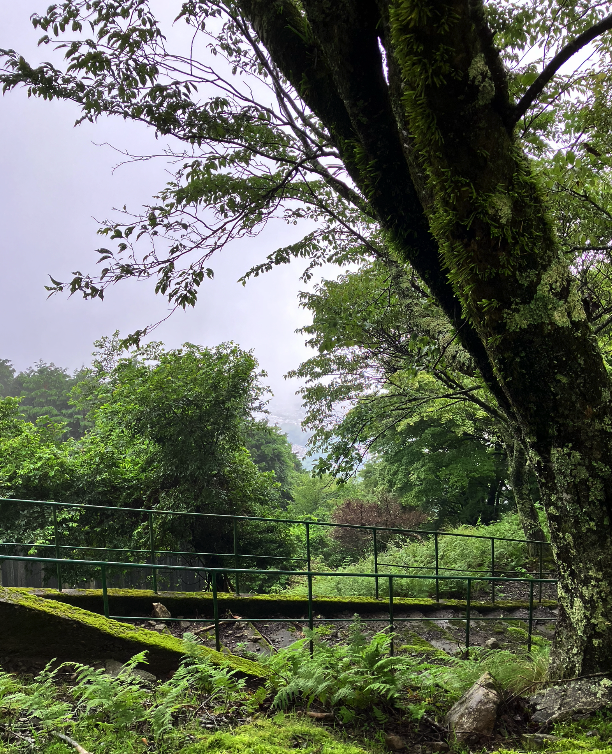
Another Christian author, many centuries later, also wrote about trees, though these trees were not happy about being cut down and used. J.R.R. Tolkien writes about the ents, tree-creatures, and the things that they have to say about the wards of humanity, our machinations, and how no one seems to care much about the natural world. In a way, ents give voice to many creatures under heaven, and in the end they fight for those creatures as they battle with Isengard and Saruman’s orcs. Tolkien once wrote (I can’t find where) that if trees were given voice and movement, they would set themselves as enemies to humanity. This reflects more about Tolkien’s feelings towards industrialization than his Christian beliefs, but in his novel, which he wrote was fundamentally Catholic work, we see what would happen if God did give plants the ability to speak.
There are, to be certain, many other Christian artists who have wondered in their work about what trees might think about the world (a particularly good one for children is The Tale of Three Trees, by Angela Elwell Hunt). Whether they are sympathetic to the human plight or they are antagonistic towards us, Christian authors seem to believe that trees have something important to say.
The Eucharistic prayer in the Episcopal BCP, however, goes a step further: it says that “every creature under heaven” wants to praise God along with humanity and the angels. The prayer doesn’t wonder about what they’ll say; it claims that we know what the natural world wants to do, and it’s just what we ourselves want to do: sing in praise of God Almighty and bask in God’s glory. That’s a pretty bold claim. I’m not sure if mosquitos, giant spiders (like real giant spiders, not the ones in Lord of the Rings), and black holes are all just waiting around to give glory unto God. I’m not sure that cancerous cells or strains of incurable viruses are trying to speak to God’s glory in what they do – but you know, maybe I’m wrong. Maybe mosquitos would grieve over having to suck blood. Maybe black holes do something else than take and take and take until they’re a singularity. Maybe cancerous cells suffer as much as their hosts. I’m not sure, but we shouldn’t rule out anything giving glory to God.
I’ve often wondered if cats and dogs have a concept of the divine. I’ve wondered if trees can hear God singing (actually, I wrote a book about this once). Maybe they don’t sit around and think about God like humans do, but maybe they have a sense of the divine that is inherent in all things God created and called “good.” And if they do, then maybe we can hear God through them, which would be different than hearing God through our own human ears and nothing else. I don’t think it’s too big a claim of my own to suggest that many people these days try to hear the divine or the spiritual through their pets, the outdoors, and nature in general (sometimes much more than people try to hear the spiritual in a church).
I don’t want to leave off wondering, though, and come to some nice call to action or lesson from thinking about nature. I want to remain wondering about trees and birds living in a creation that is fallen but also good. What if they could speak? What would they say? What would they tell us?


 Incense and Crayons
Leave a comment