
A very good friend of mine loves strip malls. He also loves buildings on the sides of highways that are somewhat broken down, especially if they’re made of painted-over bricks or cinder blocks. Old mechanics’ shops, garages with no sign of ownership, dilapidated buildings with grass growing up in front of them. He loves these things.
I have tried my hardest to understand my friend’s love of things like strip malls and old buildings, let alone most buildings on the sides of US or state highways, and I have to admit that I have failed. I just don’t get it. I have an aversion to these places. I grew up in New Jersey, where there are many such high ways, and to top it off, these highways are often choked with traffic. I get a claustrophobic feel when I’m on these roads. I’d rather see open fields, or farmers’ fields, or forests, or something else but the remains of human habitations. And when I try and tell this to my friend, he just smiles, shakes his head, and says, “Then you just don’t get it, Tim.”
I remember being similarly conflicted when driving out to the west coast for graduate school. My wife and I packed everything we owned in a car and head out from Georgia to Oregon on a twelve-day trek. It was an amazing drive, even the Great Plains, which everyone told me would be boring. We went through South Dakota and Wyoming, then up into Yellowstone and down into southern Idaho. And it was in Idaho that we finally came to a landscape that could not find beauty. The land looked parched, yellow, empty. There were few towns. It felt not just lonely but abandoned. And this created a conflict in my heart that is similar to the conflict I feel when my good friend talks about how much he loves strip malls. Can’t good be found in every place? At least some semblance of good? And if so, then what is left wanting in me that I can’t see that good?
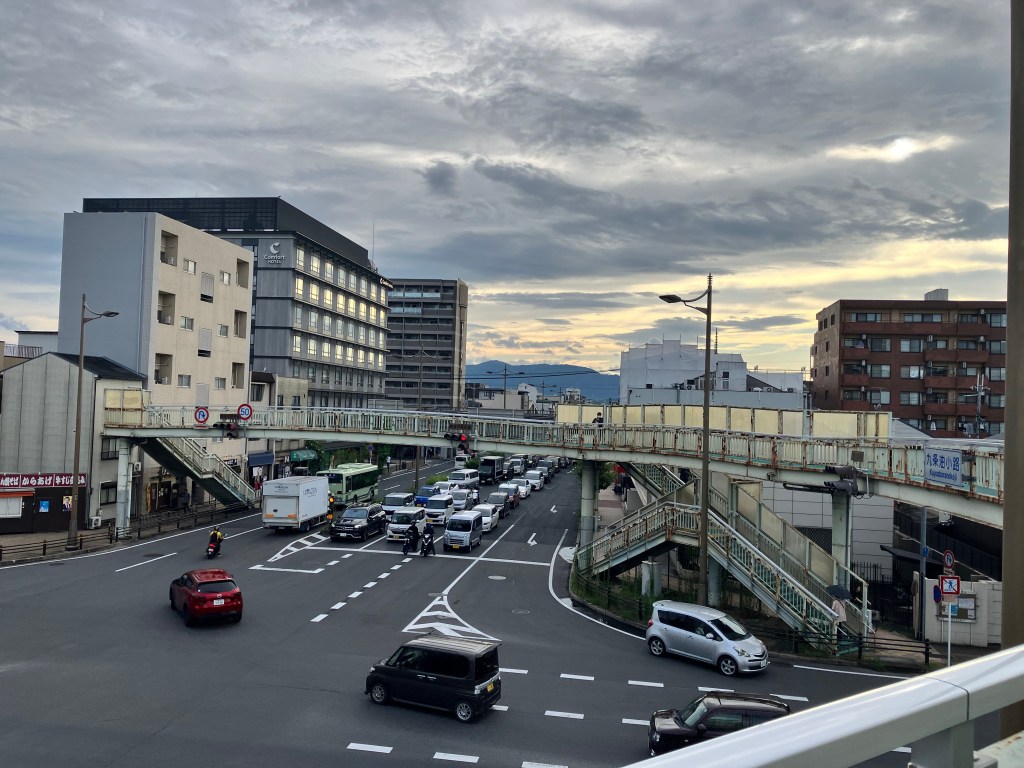
These questions, and others like them, often fill my heart. How easy it is to see beauty in the birds singing in early spring, or the wind rushing through the trees, or tall, snow-capped mountains. Yet when we come to parts of those Creation that have been touched, perhaps, too firmly by the hands of humanity, how hard is it to see God. I’ve heard it said that we develop and grow as Christians, we become more spiritually mature, when we see more of God’s presence in the world than we ever have before. God speaks to us through Creation; but what happens when we can’t hear that voice?
At questions like this, and at those above, I think it’s important to remember that we are living in a broken world. Nor is it just humanity that is broken, but all of Creation. Although both we humans and Creation itself has been healed by Christ, the world is still being born into that newness (in other words, we are already-but-not-yet made whole). And in this, we have to remember that there are certain parts of Creation that bear the weight of evil. I’ve heard them described somewhere as “anti-sacramental spaces.” A strip mine or mountain-top removal are places of human desecration. Many battlefields are, and I often wonder how anti-sacramental were the trenches of World War I. These are extreme cases, but they’re sufficient to explain that some parts of the world, often those places which have been harmed by human sins, express God’s love and grace less fully. It is the grace and power of God, however, that even in these places, even in the worst of circumstances, God’s love can still shine forth in human bravery and action. Thanks be to God.
It’s not these places, however, that I’m really talking about here. I don’t think that my friend is wrong for liking strip malls, or that old, beat up, cinderblock warehouses are necessarily anti-sacramental. What I’m talking about is our growth in seeing God more fully present in the world around us. Something happens to our souls when we don’t turn away from the sight of old garages or abandoned parking lots. When we stop rejecting things outright in our hearts, even if we’re just plain neutral to them, a part of our hearts stops exerting itself in the wrong direction. It stops pulling or pushing or guarding itself and starts allowing. And while I’d much rather see a community garden than an abandoned parking lot, that garden can’t be built until we stop exerting our will so forcefully and see what God is saying through something.

Our wills are important. It’s important to want to pray, to want to work for God’s Kingdom, to want to love more fully, but wanting all the times causes us to forget that it’s not by our wills alone that good comes into this world. Actually, good doesn’t come into this world by our wills at all but by God’s grace. “Allowing”, as I described above, gives us a chance to see the radiance of God in the world around us and to recognize that God’s will is not just an extension of our own souls. There’s a lot more in this world than humanity, and God is always hard at work in all the things that he has created.


 Incense and Crayons
Leave a comment