
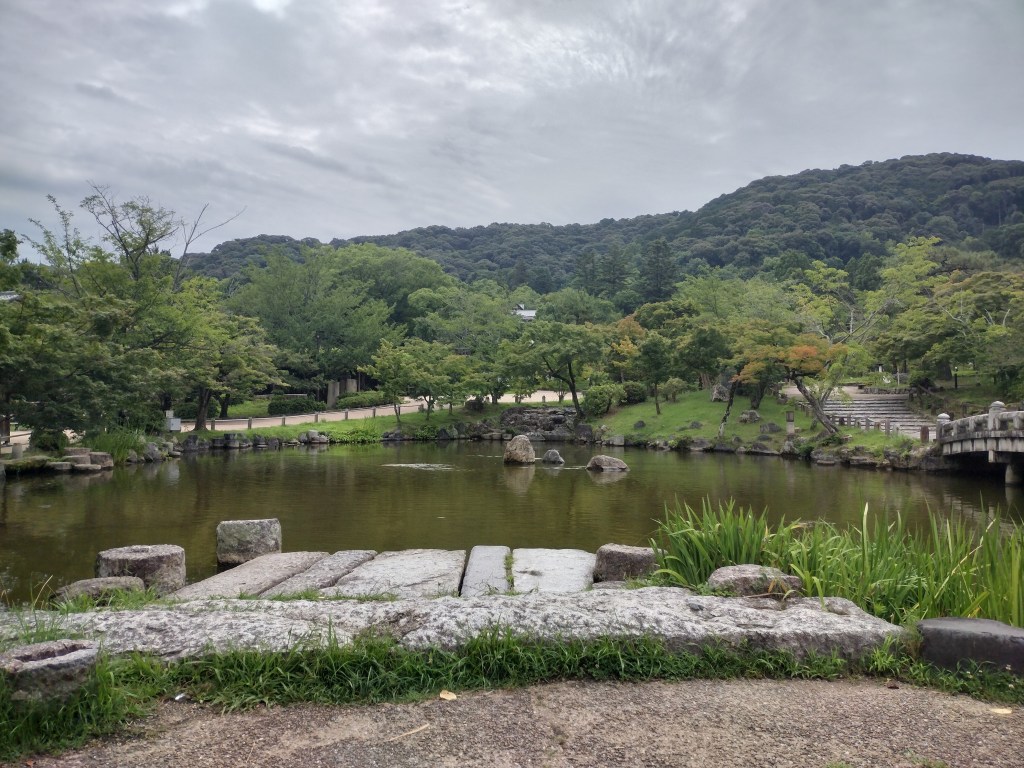
the pictures included in this week’s post are from my wife and my trip to Japan in the summer of 2024
In my post last week, I wrote a little about the experience of what it feels like to pray. This topic comes, for me, directly from a question that I’ve had for quite some time: “what is the experience of artistic creativity?” What does it feel like to do art? I found this question while writing as a teenager, and it followed me throughout college and graduate school as I read how other artists answered these questions. I was particularly interested in medieval myths about the creative process, particularly in northern and northwest Europe. I almost wrote a dissertation on this topic (I went to seminary instead of to a PhD program), so I can go on and on about this, but the short of it is that creativity is often associated with a death of the self. In this, it’s quite similar to Christian prayer.
As Christians, we join Jesus in lifting our crosses. This can mean many things. “Taking up our cross” can mean committing ourselves to the service of others, especially the less fortunate, those who God loves and calls on us to care for. The phrase can also mean that we make a variety of so-called “little deaths” in preparation for the “big death” at the end of our earthly lives. We die to our possessions so that they don’t become idols, we learn to accept difficulties in health and “die” to the idea that we’re immortal, and we die to the lie that we are the authors of our own fate. There is also an internal death that we find in prayer that is a bit harder to pin down and describe.
In art, we put our whole selves into what we’re creating. We get into a creative state of mind and paint or write or whatever, often without a critic’s eye. We feel that we’re fully expressing our ideas and creating exactly what we’re feeling. When we step back from what we’ve created, however, that critic in us speaks up and we’re often disappointed. We think that we’ve done a great job, but the sentences don’t flow as well as we thought, the image is out of balance, the design doesn’t flow. It’s important to take some of the critic’s insights without taking their criticism of us as artists, which can often be rather harsh. Push through, touch up, rebalance, fill in, and take another look at what we’ve done.
And in this process, we learn something new about ourselves, that, maybe, what our critic thought was out of balance is actually a deeper sense of balance than what we had considered before. Maybe the sentences don’t need to flow. Maybe they have an inner connection that gives them a looser and therefore deeper flow. In art, we reach deeper than our conscious minds, and sometimes those things that our critic thinks are bad art are actually more unconscious ways of communicating things that go beyond just words and sentiments.
When we pray, we similarly go beyond words and sentiments. We experience a part of ourselves that is closer to God than our thinking mind. Or, to put it a different way, our thinking mind is open to that part of ourselves that is closest to God. Sometimes prayer is easy, and God’s grace brings us straight through all the riff raff and hub bub of our conscious minds (our worries, our concerns, our planning, etc.) and right up before his face. Other times, it’s like pulling teeth, and prayer just doesn’t seem to work. We feel distracted, frustrated, and alone.
In either case, we die to a part of ourselves. If prayer is easy, we die to the concerns of daily life. God puts our needs in order so that the need to love, give hope, and commune with God and others is higher than our supposed need to doom scroll through the news. If prayer is hard, then God is calling us to put in a bit of work to sort out the order of our needs together with Him. In both cases, we die to fixing things on our own and join with God in the process.
There is something else that happens in prayer, something else that we die to, and I’ve been surprised to find it so often happening in parenting. Children are constantly growing. It’s like they’re snakes and, every day, shedding old skins for new skins. It’s not that they’re constantly thinking but that they’re constantly discovering new ways to be in the world. One of the reasons that many of us have such fond memories about childhood (besides that we had summers off) is that we were discovering new things in the world every day – sometimes every moment! We were dying to our younger selves and being raised with new understandings and insights into the way the world works. It’s the hope of any parent that these new insights are good ones, and that children grow into joyful, hopeful, and strong human being with a clear sense of right and wrong and love lodged deep in their hearts.
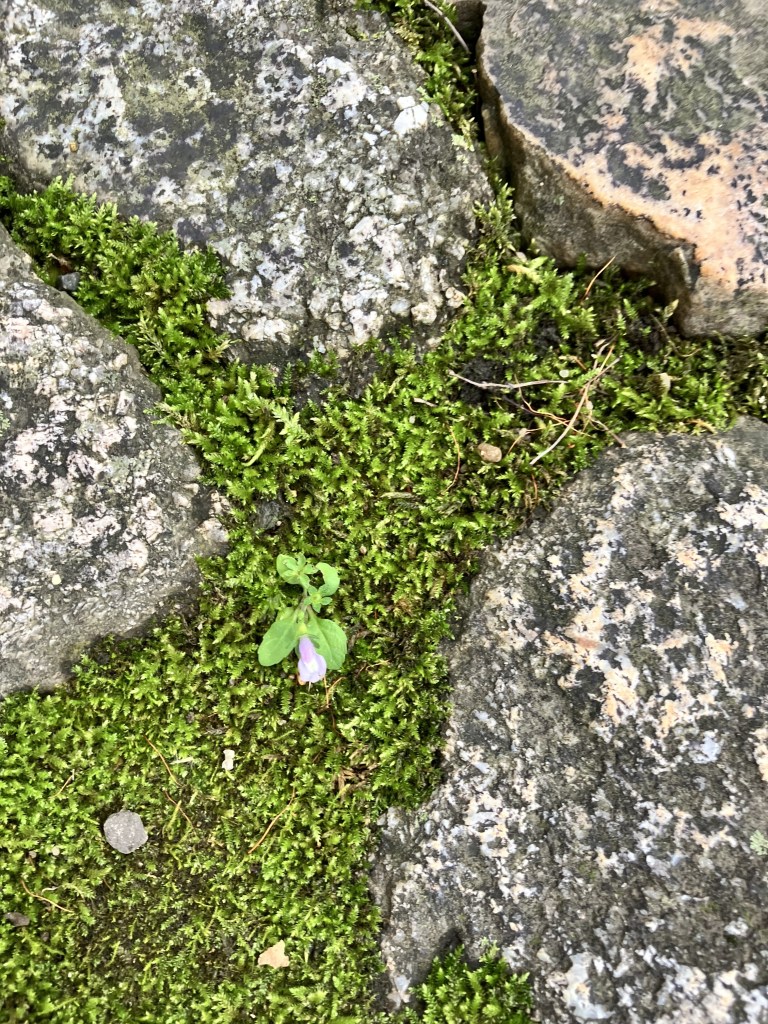
In all these cases (creativity, prayer, growing up), these are not just metaphorical deaths. Something in us dies and falls away, though that thing is also often resurrected in Jesus Christ. This is something important that Christianity offers the world, almost exclusively: that what has died will be reborn in a way that fulfills its true purpose. We die in Christ so that we may be reborn for eternity. The artist dies to the inner critic so that she may create a piece of art that inspires and entertains. Children “die” to their immature selves so that they can be reborn, year after year, sometimes day after day, into their full, adult self. And our prayer life – which is a process of growth much like the maturing of children – also dies to itself to be reborn as something new and deeper and fuller than we could ever have thought or imagined.
So, to return to where I began, what does this process feel like? What is the experience of dying to yourself and being raised again (the passive voice there is important). To me, it feels deeply humbling. I feel like I want to fight for my prior ways, my prior forms of prayer. I want to justify why I prayed that way, to defend those forms of prayer that really aren’t how I need to pray anymore. Overcoming that pride is, for me, a large part of that death.
Recently, I’ve also felt hesitant. Could it really be that there’s more out there (and more in here) that I’ve been missing? I’ve come to a wall somewhere, a cliffside with nothing beyond it but empty space; could it be that the wall is climbable, that the cliffside is mirrored with new another cliffside and that there are more lands across it to explore? Sometimes it brings tears to my eyes to imagine that, yes, there is a way forward. I don’t have to live with my current, atrophied self forever. There are new depths to explore and new ways to be. And this leads me, always, if I let it, to amazement in what God has in store for me. In what God has in store for us.
God really is amazing. We’re not bound by anything but our own sin, and Jesus has already taken care of that. We’re free to move past what we’ve been, but, importantly, to keep where we’ve come and watch it be reborn into something is, yes, new, but also familiar and beautiful. Praise be to God that there really is no end to the joys of his presence or the depths of our souls in him!

 Incense and Crayons
Leave a comment