
During the winter, my kids and I watched the snow fall. Now, we watch the rain.
What do you think about when you look outside? What comes to your mind unbidden? What do you purposefully look for? What do you look forward to?
Our Western culture favors the unconscious and the automatic. What comes unbidden or unasked for is seen as more authentic in our culture. It comes from a deeper place in us. It is not colored by revision or second guessing or the ideas imposed upon us by our culture.
This is especially true in American Christianity, which favors extemporaneous prayer and looks down on “scripted” prayers and things like the liturgy. Even in the Episcopal Church, I’ve found priests that urge me vehemently to “abandon” my sermon manuscript and to preach “for the heart.” As someone who takes great pleasure in writing (and finds much holiness and divine Presence in the writing process), I take a bit of umbrage at such comments and assumptions.
What we bring to something is as important as what we find there. We are not blank canvases upon which, say, the natural world can write a beautiful poem. We encounter the natural world. We communicate with it. Sometimes we listen, and sometimes we talk – or the spiritual equivalent of talking. Personally, trees have answered some of my most burning theological questions simply by being trees.

Kids come to nature this way, at least in my experience. Kids expect something from nature, and often that expectation is that nature will simply be there. Once, when I was on the bus to elementary school, I saw a turtle on a log on the bank of a small river. I was so excited to see one. When I looked again the following morning, however, all I saw was the log. No turtle. Each morning I looked for that turtle, and all I saw was the log and never saw the turtle again. Only after twenty years, when I was driving by this river with my wife and telling her about this turtle that I realized how ludicrous it was that I expected that turtle to be on that exact log day after day after day. But I did, because my love for little, green, shelled creatures was so immense.
The other day, at the bus stop, an orange and black butterfly flew by. My eldest daughter rushed after it, giggling, trying to catch up to it but also conscious that she could easily step on it and squish it. My younger daughter joined her, though she also had a bouquet of dandelion seeds, which blew all over the place as they danced around after the butterfly. We parents just stopped and watched this little bit of nature play before our eyes. Their love for the joy of nature, our love for the joy of childhood. Both loves are as important as the plain existence of the natural world.
What do you bring to nature when you pray with it with your eyes? I bring my love of green – not just small, green, shelled creatures, but anything green. I bring my love of small little movements of leaves in the wind, whether they’re shivering in the cold or gently swaying in the warmer weather. I bring my love of big things and am taught to also love small things. The sky above and the trees against it. Clouds of all different shapes, sometimes all melded together, sometimes with bits of blue shining through. I bring a heart ready to be let to love. What do you bring?
We learn so much about ourselves when we reflect in this way. It’s no secret in my family that green is my favorite color, but I learn in my love of green the ways that love works inside of me. I learn what parts of my heart love moves, what it does to my mind and my stomach, how my fingers feel light and thin, how my breathing changes, what things my mind turns to when I’m sitting in love of green things. I learn that I CAN love, quite simply, which is something that is easy to forget sometimes in a world so full of anger and resentment.
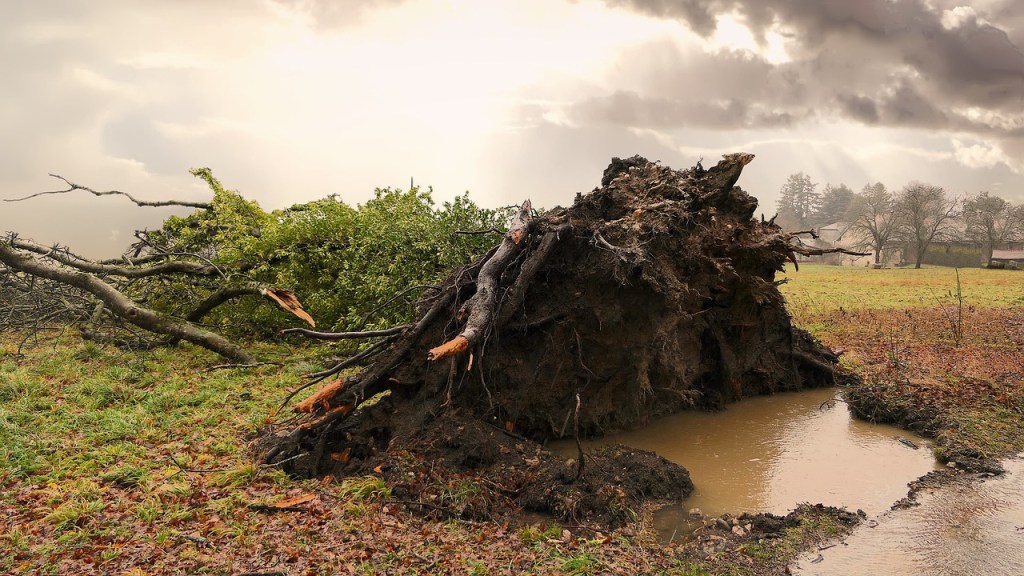
I have no misunderstanding of nature as a peaceful utopia. The same natural world that I can look at in peaceful moments can also destroy lives with hurricanes and tsunami. Animals eat plants, and animals eat other animals in turn. Yet there is peace here nevertheless, and that peace should be attended to and tended to, just as our hearts should be attended to and tended to. Maybe that’s overly optimistic or idealistic of me, but that’s just fine. Being too idealistic teaches me things about myself, too.
The other day, one of my daughters played outside, even though it was drizzling. The other got a thorn stuck in her palm, and she was both amazed and delighted when it fell out. This sort of action in the natural world makes me happy as a father. I feel like I’m doing the right thing by encouraging my children’s natural love of the world. I’m also happy, however, when they’re just looking out the window, pointing out things that are happening, or just looking and watching, and learning what it’s like for it to rain or for the sky to be blue. I like teaching them that all that is enough.

 Incense and Crayons
Leave a comment